NATIONWIDE DIRECT RV PURCHASE INQUIRIES
RVBuyerUSA Buys RVs Across All 50 States
Share the RV you own and find out whether a direct purchase may be possible.
✓ Buying RVs Since 2008
✓ Serving All 50 US States
✓ Free, No-Obligation Requests
✓ Free Towing With an Agreed Purchase
Primarily Private Owners
Tell us about an RV you personally own, whether you still use it or it has been sitting in storage.
Dealership Inquiries Welcome
Dealerships can also submit recreational vehicles for individual purchasing consideration.
Motorized and Towable RVs
We review inquiries involving motorhomes, travel trailers, fifth wheels, toy haulers, camper vans, and other RV types.
Each RV Reviewed Individually
Vehicle condition, location, ownership information, and other details matter. An inquiry does not guarantee an offer.
BEGIN WITH YOUR RV
Start With the RV You Have
You don’t need to prepare a sales advertisement before contacting RVBuyerUSA. Begin with what you know about your vehicle.
Some owners have an RV that’s ready to travel. Others have a trailer parked at a storage facility, a motorhome with mechanical problems, or a fifth wheel they haven’t used in several years.
The first step is the same: tell us what the RV is, where it’s located, and how to reach you. If something about its condition needs explaining, use the message field.
Request a Free RV Offer Review
If you don’t know the exact model or trim, provide the best information available and indicate what you’re unsure about.
Your offer request is free. You are not required to accept an offer, and submitting the form does not create a purchase agreement.
Submitting this form requests contact about your RV inquiry. It is not an opt-in to unrelated marketing communications. Please review our Privacy Policy.
Do not include loan account numbers, Social Security numbers, or other sensitive credentials in the message field.
A PRACTICAL OPTION FOR OWNERS
A Direct RV Buyer for Owners Across America
When You’re Ready to Consider Selling, Start With the Vehicle
An RV can be expensive to maintain even when it isn’t traveling. Tires age, batteries need attention, seals deteriorate, and storage expenses can continue while the vehicle sits unused.
For some owners, those costs are part of deciding whether to keep an RV. Others are selling simply because their household needs have changed.
RVBuyerUSA has been purchasing recreational vehicles since 2008. We primarily work with private owners throughout the United States and also consider inquiries from dealerships.
Our service is based on evaluating an RV for a potential direct purchase. We are not a public classified-listing platform or an RV consignment service.
You provide information about the vehicle. We consider whether a direct purchase may be possible. If an offer is made, you decide whether its terms work for you.
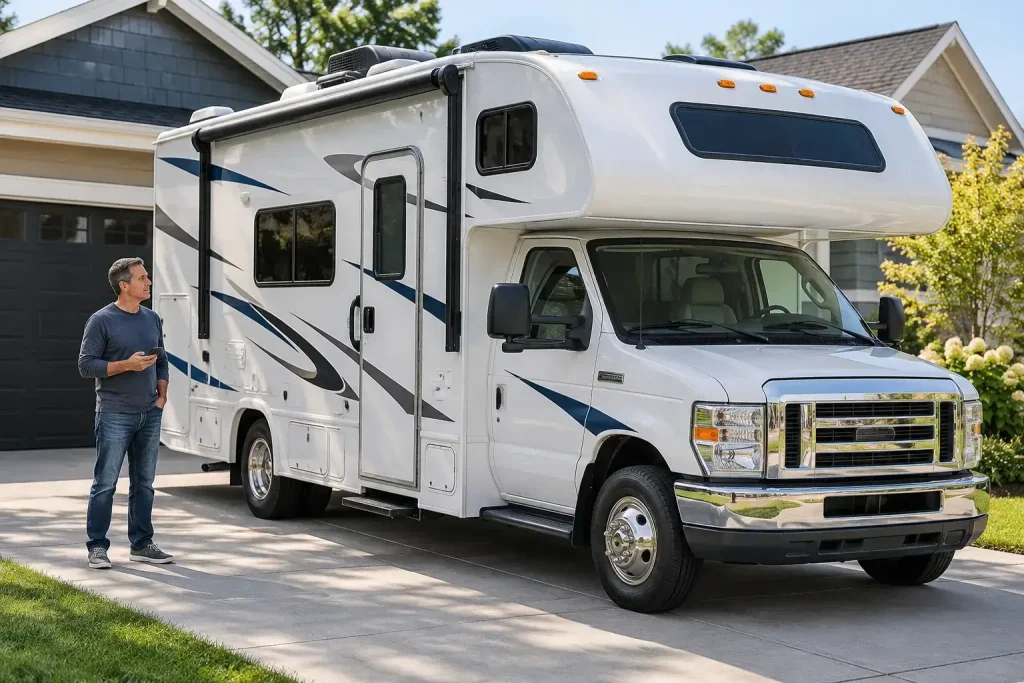
One Direct Inquiry. A Choice That Stays Yours.
Whether an RV is actively being used, parked in storage, or owned by a dealership, the vehicle itself remains the focus of the purchase review.
Learn more about RVBuyerUSA and our experience in purchasing recreational vehicles.
RVs Still Being Used
An RV doesn’t need to have a problem for its owner to explore selling. You might be changing to a different type of recreational vehicle, reducing expenses, or no longer planning the same kind of trips.
RVs Sitting in Storage
A stored RV may have concerns that aren’t immediately visible. Tell us when it was last used, whether its equipment works, and what you know about the condition of the tires, roof, batteries, and other systems.
Dealership-Owned RVs
Dealerships are also welcome to ask about a potential direct purchase. Include the vehicle’s year, make, model, current condition, and location so the inquiry can be reviewed in context.
Since every RV is considered individually, submitting one does not establish that it will qualify for purchase.
RV TYPES WE CONSIDER
Motorhomes, Trailers, Campers and More
What Kind of RV Are You Selling?
The word “RV” covers vehicles with different mechanical systems, construction methods, towing arrangements, and living accommodations.
Those differences matter when assessing a possible purchase. RVBuyerUSA accepts inquiries involving a broad range of recreational vehicle categories.
Class A Motorhomes
Class A motorhomes often have extensive living accommodations along with chassis, engine, transmission, generator, and other mechanical systems. Relevant details may include mileage, slide-out operation, interior condition, and maintenance history.
Class B Motorhomes and Camper Vans
Compact camper vans vary in their factory equipment and conversion designs. Tell us about the base vehicle, mileage, living-area features, installed equipment, and any known mechanical or interior problems.
Class C Motorhomes
Class C motorhomes combine a cab and drivetrain with a separate living structure. Roof and cab-over seams, mechanical condition, water intrusion, and equipment operation may all be relevant.
Travel Trailers
Travel trailers range from lightweight campers to large multi-room models. Their condition can depend on roof and floor integrity, tires, brakes, appliances, storage history, and the equipment needed to tow them.
Fifth Wheels
Fifth wheels have specialized hitch requirements and may have substantial living space. Length, overall condition, slide-outs, tires, roof condition, and pickup accessibility can affect evaluation and transportation planning.
Toy Haulers and Other RVs
Toy haulers may include garage areas, loading ramps, and additional equipment. We also consider inquiries for other RV configurations, including specialty campers and towable recreational vehicles.
Not sure which category fits your vehicle? Share its year, make, and model. Accurate identification is more useful than guessing at the RV’s classification.
Each vehicle is individually evaluated. Being in one of these categories does not automatically guarantee a purchase offer.
CONDITION CONSIDERATIONS
What If Your RV Is Damaged or Cannot Move?
Describe the Problem Before Deciding Whether to Repair It
An RV may have value as a possible purchase even when it is no longer in reliable operating condition. However, the nature and extent of its damage matter.
RVBuyerUSA considers inquiries involving damaged and non-running vehicles. A condition problem doesn’t automatically rule out an evaluation, but it also doesn’t mean a purchase will be approved.
Mechanical Problems
For motorhomes, explain known engine, transmission, electrical, starting, or drivability problems. State whether the RV starts, runs, and can safely move.
You do not need to diagnose a mechanical problem you don’t understand. A description of the symptoms and any previous repair findings is useful.
Roof Leaks or Interior Water Damage
Water can enter an RV around roof seams, windows, slide-outs, and other openings. Visible stains may not reveal the full extent of damage to flooring, wall materials, or interior components.
Tell us where you have noticed a problem, whether the leak is ongoing, and what repairs have already been attempted, if any.
Collision and Weather Damage
Exterior damage may involve panels, windows, roofing, structural components, or other areas. Hail and storm exposure can affect different RVs in different ways.
Describe the affected areas and any known safety concerns. If photographs are requested, provide images that show both the damaged areas and the overall vehicle.
Non-Running and Long-Stored RVs
A motorhome that hasn’t moved in years may have flat tires, discharged batteries, deteriorated hoses, or unknown mechanical problems.
A towable RV may also present transportation challenges if its tires, wheels, brakes, hitch, or frame are damaged.
When you inquire, explain whether the RV can roll, whether its tires hold air, and whether a towing vehicle could reasonably access its location.
Before paying for major repairs solely to prepare an RV for sale, you can request an evaluation of its current condition. The result may help you compare your options, without guaranteeing that an offer will be available.
HOW INDIVIDUAL REVIEWS DIFFER
The Details Behind an Individual RV Evaluation
A Model Name Is Only the Starting Point
Two RVs from the same manufacturer and model year can have very different conditions.
One may have been maintained regularly and stored under cover. Another may have been exposed to weather, left unused for years, or affected by mechanical and structural problems.
That’s why an individual purchase evaluation requires more than a general price-guide figure.
Vehicle Identity and Specifications
Year, manufacturer, model, RV category, length, and relevant equipment help identify what is being considered.
For motorhomes, chassis, engine, and mileage information can also be useful.
Actual Condition
Known damage, repairs, operating problems, interior wear, structural issues, and working equipment can affect a potential purchase.
Be specific when possible. “The rear slide-out does not extend” is more informative than “minor issue.”
Maintenance and Available Information
Service records, recent repairs, photographs, and explanations of known issues may help clarify the RV’s condition.
If you don’t have those records, say so. Missing information can be discussed rather than replaced with assumptions.
Ownership and Location
A clear understanding of the RV’s ownership, any recorded liens, and where it is parked helps establish whether a transaction could proceed.
Location and accessibility may also influence transportation arrangements.
The Difference Between a Listed Price and a Direct Offer
An advertised asking price is the amount a seller hopes to receive. A price-guide estimate is based on the guide’s particular methodology and assumptions.
An individual direct purchase offer is a proposed transaction amount for a specific RV under specific circumstances.
These figures should not be treated as interchangeable, and the highest advertised price for a similar RV is not proof of what your vehicle could sell for.
For a more detailed discussion of these factors, see Value My RV.
UNDERSTAND THE STEPS
From RV Inquiry to a Possible Purchase
Know What Each Stage Means
Submitting an RV inquiry is not the same as receiving an offer. Receiving an offer is not the same as accepting it. And agreeing to purchase terms is not the same as completing the transfer and handoff.
Understanding those distinctions helps sellers know what has happened and what remains to be arranged.
1. Tell Us About Your RV
Begin with the basic vehicle and contact details requested in the form.
Mention significant condition issues or anything unusual about the RV’s location. If more information is needed for evaluation, it can be requested.
2. Review a Possible Purchase Offer
The information is considered to determine whether the RV may be a suitable purchase.
Depending on the vehicle, this may involve additional questions, photographs, documentation, or further verification.
An offer may be discussed when the RV meets the relevant purchasing considerations. Not every inquiry results in an offer, and no automatic valuation or fixed response time is promised.
3. Decide and Confirm the Transaction Details
If an offer is made, you can review it and decide whether to proceed.
For an agreed purchase, the parties need to establish the applicable terms, ownership documentation, payment arrangements, and collection details before completing the transaction.
Free towing is included with an agreed purchase. The practical pickup arrangements must be confirmed for that vehicle.
You remain free to decline an offer.
For a fuller explanation, read How the RV Buying Process Works.
COMPARE SELLING ROUTES
Choosing Between a Direct Buyer, a Listing and Consignment
Compare the Work Involved, Not Just the Asking Price
An RV owner has several possible ways to sell. Each comes with different responsibilities, costs, and levels of involvement.
Consider what matters most to you before choosing a route.
Direct RV Purchase
What it involves: An RV buyer considers the vehicle for a possible direct purchase.
Potential advantage: You can explore a single purchase proposal without first advertising the RV to multiple members of the public.
Consideration: A direct purchase offer may be different from the amount you hope to receive through a retail-oriented sale. The terms and amount still need to make sense for you.
Private RV Listing
What it involves: You advertise the RV, determine your asking price, answer inquiries, and negotiate with potential buyers.
Potential advantage: You control how the RV is presented and can seek a price based on your own expectations.
Consideration: You manage buyer communication, appointments, inspections, and the uncertainty of finding an acceptable buyer.
RV Consignment
What it involves: A business advertises or markets your RV under a consignment arrangement.
Potential advantage: Some marketing and buyer-related tasks may be handled by the consignment business.
Consideration: Commission, fees, contract duration, vehicle access, and other terms should be understood before you sign.
A direct buyer, a private listing, and consignment are different approaches—not different names for the same service.
If a direct purchase is an option you’d like to compare, tell RVBuyerUSA about your vehicle before deciding which selling route to pursue.
BEFORE THE HANDOFF
Ownership Paperwork and Collection Considerations
Important Details to Clarify Before Completing a Sale
A proposed purchase amount is only one part of an RV transaction.
The ownership documents must support a lawful transfer, any existing financing must be addressed, and both parties need to understand the payment and pickup arrangements.
Check the Title and Recorded Owner Information
Locate your available ownership documentation and confirm whose name appears on it.
If more than one owner is listed, additional signatures may be necessary under the rules that apply to the vehicle.
If the title is missing, damaged, or held by a lender, mention the situation early.
Title-transfer, seller-notification, and registration requirements differ by state and sometimes by vehicle classification.
For official information, use the USAGov directory of state motor vehicle agencies.
Explain Any Outstanding Loan
If you still owe money on the RV, check the current payoff amount and the lender’s instructions for releasing its interest.
A transaction involving a lien may require payment arrangements and documentation involving the lender.
The presence of financing does not automatically determine whether an RV can be purchased. The specific ownership and financing details need to be considered.
Confirm Where the RV Is Located
Is the RV parked in a driveway, a commercial storage facility, on private land, or somewhere that requires special access?
Mention locked gates, narrow roads, soft ground, low-clearance obstacles, flat tires, damaged hitches, or other issues relevant to collection.
Being able to reach an RV safely can matter as much as knowing whether it runs.
Discuss Payment, Documents, and Pickup Before Handoff
If you decide to accept a purchase proposal, confirm what remains necessary to finalize the agreement.
Both parties should understand the agreed price, any conditions to completing the purchase, the payment method and timing, the documents each person must provide, and the arrangements for collecting the RV.
Any state-required notices or filings should also be identified. Do not assume the other party will complete a seller-specific legal obligation without confirmation.
Free Towing With an Agreed Purchase
RVBuyerUSA includes free towing as part of an agreed RV purchase.
This does not mean every submitted RV qualifies for purchase or that a standalone removal request receives free towing.
The vehicle’s location, condition, and access are relevant to determining practical collection arrangements.
NATIONWIDE COVERAGE
RV Buying in All 50 States
Your Location Is Part of the Evaluation, Not a Requirement to Visit a Showroom
RVBuyerUSA provides an RV purchasing service covering all 50 US states.
An owner may have a trailer at home, a motorhome in storage, a camper parked on rural property, or a vehicle that cannot easily be transported.
You can begin with the RV’s ZIP code and basic identifying information.
Nationwide coverage means owners throughout the country can submit vehicles for consideration. It does not establish automatic purchase eligibility or imply that RVBuyerUSA operates a physical branch in every state.
Western States
Owners in California, Arizona, Nevada, Colorado, Washington, and other Western states can submit RV purchase inquiries.
Vehicle location and transportation accessibility remain relevant, especially for larger or non-running units.
Southern States
RVs located in Texas, Florida, Georgia, Tennessee, North Carolina, and other Southern states are within the nationwide inquiry coverage.
Provide the RV’s actual ZIP code even if you live in a different state from where it is stored.
Midwestern States
Owners in Ohio, Michigan, Wisconsin, Illinois, Missouri, and surrounding states can submit motorhomes and towable RVs for consideration.
For vehicles stored over long periods, describe what is known about their mechanical and physical condition.
Northeastern States
Owners in New York, Pennsylvania, New Jersey, Massachusetts, and the rest of the Northeast can also request individual evaluations.
Access limitations at urban storage facilities and other parking locations should be described when relevant.
Coverage also includes Alaska and Hawaii, where transport feasibility may be an especially important part of an individual purchase review.
Find state-specific service information through our Nationwide RV Buying Locations hub.
SELLER QUESTIONS
Questions RV Owners Ask Before Selling
For more detailed answers, read the RV Selling FAQs.
THE NEXT STEP IS YOURS
Explore an RV Offer Without an Obligation
Find Out Whether a Direct Purchase May Work for Your RV
You may have a well-maintained motorhome, a travel trailer that’s no longer getting used, or an RV with problems you would rather disclose than repair before exploring a sale.
Start with the information you have.
RVBuyerUSA will consider the vehicle individually. If a purchase offer is available, you can review the proposed terms and decide whether you want to proceed.
There is no obligation to accept.
Have a question that isn’t about a new offer request? Contact RVBuyerUSA.
RVBuyerUSA — Buying RVs Since 2008 · Serving All 50 US States